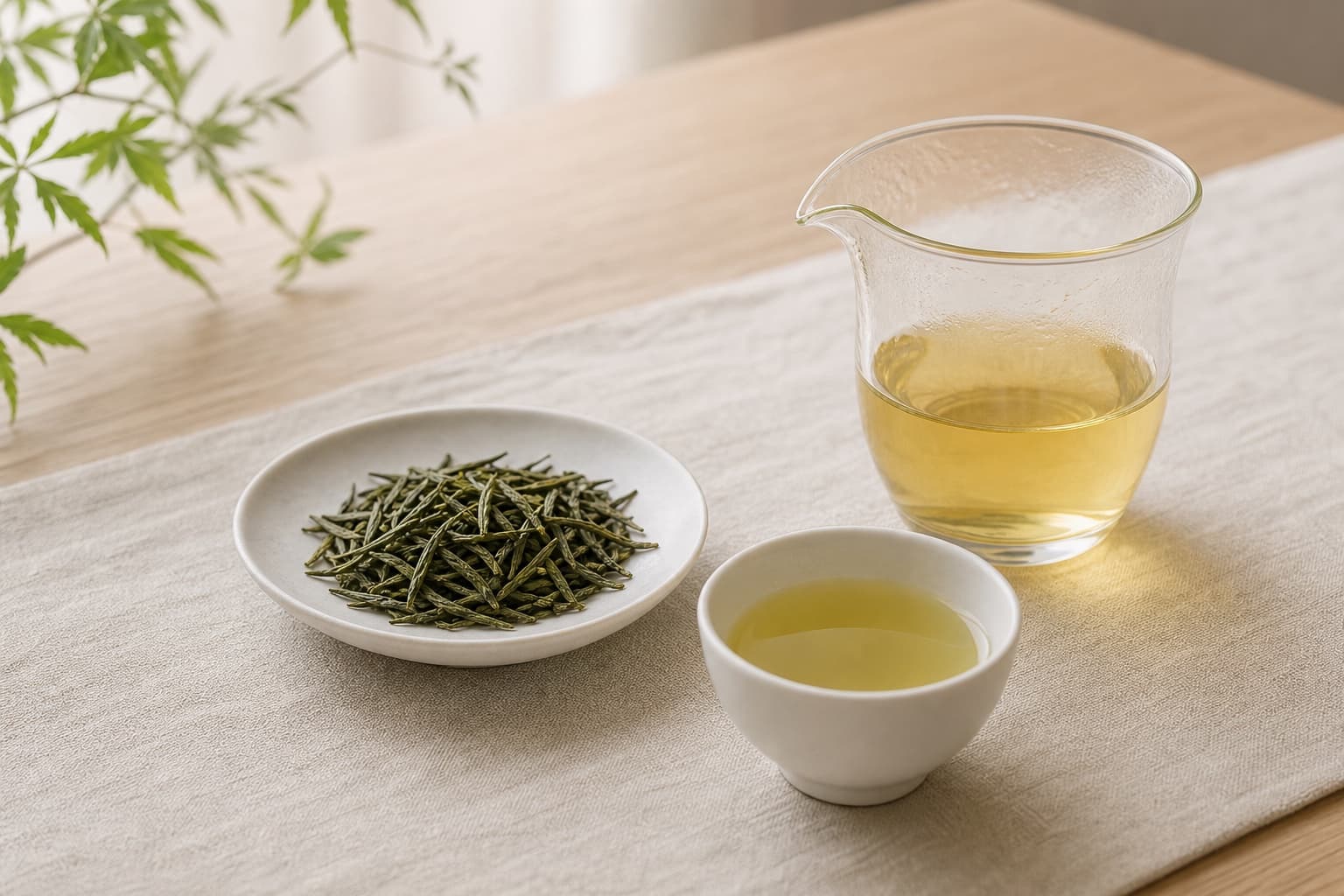
What is green tea?
Quick answer
Green tea is made from tea leaves whose oxidation is stopped soon after harvest, usually with heat. This preserves fresh, grassy, nutty, or savory flavors. It is less forgiving of boiling water than shu puerh or roasted oolong, so a good home baseline is 3 g per 100 ml at about 80 °C (176 °F).
What it tastes like
Chinese pan-fired greens often lean chestnut-like and gently sweet. Japanese steamed greens can be more vegetal, marine, and umami-rich. “Green” does not mean one universal flavor, but freshness and careful storage matter throughout the category.
How to avoid bitterness
Use cooler water, shorter steeps, and less leaf before adding sweetener. For a 250 ml mug, begin with 2–3 g at 75–80 °C for roughly two minutes. Pour it off the leaves instead of letting them sit indefinitely.
Common questions
Should green tea be rinsed? Usually not. A rinse can discard a meaningful part of the first delicate infusion.
How fresh should it be? Many everyday green teas are best within months of opening. Keep the bag sealed, cool, dry, and away from strong odors.
Compare green tea with oolong, calculate your leaf with the grams tool, or start with the broader beginner home guide.